research
In my research, I aim to uncover the general principles that restrict how syntactic structures can be built and interpreted in natural languages, and why these principles should hold. Most of my research uses structures with clausal embedding as a lens through which to investigate such principles. Two other prominent empirical areas of my research are complex agreement systems and discontinuous phrases. Here are the main theoretical questions that drive my research:
- What kinds of meanings are associated with the syntactic elements responsible for clausal embedding, and what is the role of these elements in modal displacement?
- What argument and event structures can clause-embedding verbs have, and how do they affect selection and interpretations of embedded clauses and cross-clausal dependencies?
- What is the role of semantic triviality in restrictions on clausal embedding?
- Why do locality restrictions on syntactic dependencies arise, and how are they affected by the syntax and semantics of embedded clauses?
- How do languages deal with surplus of syntactic features, and what can this tell us about interactions between Vocabulary Insertion and operations in the narrow syntax?
- What gives rise to discontinuous spell-out of certain constituents? Is it a product of true syntactic sub-extraction, or a PF phenomenon, and what principles constrain it?
In answering these questions, I search for new phenomena and robust empirical generalizations that can better inform our theories, and thus fieldwork is a major component of my research process.
Besides theoretical linguistics, I am interested in documentation and preservation of understudied languages. I believe that this work is critical in the present moment, when about 44% of the world’s languages are endangered. Together with the members of my lab, I seek to collaborate with indigenous communities on language projects that contribute to preservation of linguistic and cultural diversity in the world. Since 2024, my lab has been colloborating with the Alabama-Coushatta Tribe of Texas on language documentation and preservation of the Alabama language (Muskogean family).
Alabama Project
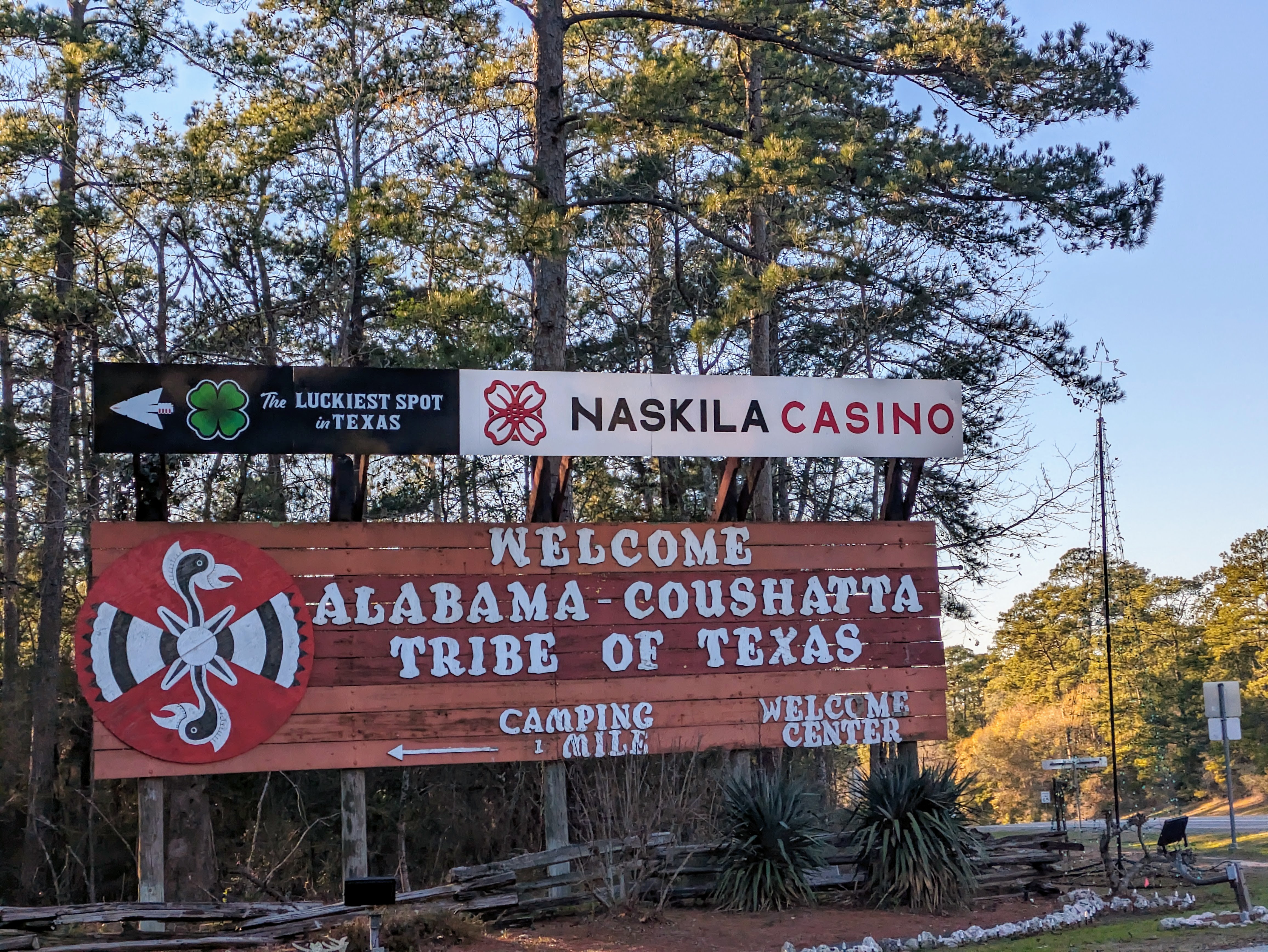
Alabama is an endangered language of the Muskogean family that is currently only spoken on the Alabama-Coushatta reservation in Texas. I got introduced to this indigenous community by Ava Silva, an undergraduate student at Harvard and a member of the tribe. In 2024, my lab started a collaborative project with the Alabama-Coushatta tribe, whose main goals are documentation and preservation of the Alabama language. I have been directing regular fieldtrips to the Alabama-Coushatta reservation (June 2024, 2025, 2026 and January 2025, 2026), in which my students and I investigate grammatical properties of Alabama and conduct language workshops for the community. We are working on writing a grammatical description of Alabama and on creating teaching materials for the language. We are working with Stevie Zya Harvel to create a coloring book that teaches letters of the Alabama alphabet and some related words and phrases. Some of the materials that we’ve been creating, as well as an updated version of the Alabama Dictionary (Sylestine, Hardy & Montler 1993), can be found here: https://alabamadictionary.github.io/ (website designed by Jacob Fernandes).
Semantics of Clausal Embedding

Attitude verbs have been traditionally thought of as lexical items introducing modal displacement: the ability of language to not only talk about here and now, but to shift evaluation of propositions to other times and other possible situations. For example, Nadya believes [that the squirrel ate the peanuts] shifts the evaluation of the proposition the squirrel ate the peanuts to situations compatible with Nadya’s beliefs. The big question that emerges from such constructions is this: How does natural language achieve modal displacement of embedded propositions, how does it relate to entailment properties of constructions with embedded clauses, and what is the division of labor between the clause-embedding verb, and the different syntactic elements in the left peripheries of embedded clauses? In my work, I argue that, contra the traditional view, the source of modal displacement is inside the embedded clause. I investigate the meanings of elements in the left peripheries of embedded clauses, and argue that they give rise to a number of restrictions on clausal embedding. This approach requires us to rethink, among other things, how to model monotonicity in attitude reports, verbal mood, and interrogative embedding.
Argument/Event Structure and Clausal Embedding

In my research I investigate how embedded clauses integrate with the clause-embedding nouns and verbs: what roles they play in argument structures, how they affect the type of the event that the verb describes, and the meanings of the resulting sentences. I proposed that there is a one-to-one correspondence between the syntactic category of the embedded clause and the kind of role it can play in the argument structure of a verb: nominalized clauses always receive the same interpretations as DP arguments, whereas bare embedded clauses with speech and attitude verbs always describe propositional content of the eventuality that the verb denotes. This suggests a very tight syntax-semantics correspondence, which is not a logical necessity, and implies that only nominal arguments are true arguments of verbs—bare CPs are always verbal modifiers. I argued that these two paths of clausal embedding lead to a number of consequences in how sentences with embedded clauses are interpreted, including ambiguities with verbs of speech, presence of factivity and veridicality inferences, possibility of clausal movement, and ability to form indirect wh-dependencies.
Triviality and Clausal Selection

In my work I argue that triviality and L(ogical)-analyticity are responsible for many, if not all, selectional restrictions of clause-embedding predicates: certain combinations of predicates and clauses might be syntactically well-formed, but lead to trivial meanings, and such semantic deviance leads to ungrammaticality. The idea that semantic triviality can lead to ungrammaticality can help us explain why clauses that are verbal modifiers tend to be bigger in size, why polarity-sensitive subjunctives appear only with some clause-embedding verbs, and why stative ‘think’ cannot embed questions. I also proposed that true conjunction of full-sized embedded clauses (CPs) is impossible in natural languages due to the meanings of elements in the clausal left peripheries: such conjunctions are always either trivially false or redundant, leading to their ungrammaticality. This proposal allows us to explain a cross-linguistic generalization: whenever ‘CP and CP’ strings are possible, the conjunction is compatible with Conjunction Reduction and has wide scope with respect to the embedding predicate.
Cyclicity and Locality

Cyclicity is hypothesized to be a fundamental property of all syntactic derivations. There is periodicity to how syntactic operations are applied, i.e., syntactic rules apply bottom-up in cycles which are ordered with respect to each other. For example, agreement between I and am in Nadya believes [that I am covered in ivy leaves] must occur before I am covered in ivy leaves combines with that, which in turn must occur before [that I am covered in ivy leaves] combines with believe, and so on. A big question for the syntactic theory is what exactly is the notion of cyclicity that governs application of syntactic rules, and what role does it play in explaining locality of syntactic dependencies. In my work, I approach this question with special attention to how syntax and semantics of clausal embedding affect locality, arguing that both the structural differences at edges of embedded clauses and their external syntax affect possibility of extraction out of them. Currently my work in this domain focuses on selective opacity: I am interested in why the same syntactic constituent could be opaque to some syntactic dependencies but transparent to others, and how the intuition that movement is constrained by the functional sequence ('’The Level Embedding Approach’‘) could be worked out and married with our theories of clausal embedding.
Featural Excess and Exponence

Another major theme in my research is the question of how natural language grammars handle featural excess created by syntactic operations, and what we can learn from such configurations about the principles of Vocabulary Insertion and about the architecture of the grammar. For example, are the features that the exponent is not specified for deleted once it matches with the syntactic head, or can they be shipped off to some other head that could expone them? Does featural excess ever create problems for the Spell-Out? Can it lead to ungrammaticality, and could that ungrammaticality be saved by syncretism? To answer these questions, I have been investigating complex agreement in South Caucasian languages and, more recently, agreement and Person Case Constraint effects in Alabama and case-matching effects in long-distance wh-movement in Georgian.
Discontinuity of Noun Phrases

Languages vary in whether they allow discontinuous noun phrases: while in languages like English sentences with ‘‘extraction of the left branch’’ like *Every I saw lamp hanging from the ceiling are ungrammatical, equivalent strings in languages like Russian are fully acceptable. I am interested in how such discontinuity arises, how it is restricted, and why languages vary in whether they allow discontinuous phrases. One hypothesis I argued for is that this discontuity is only apparent: all languages move only full noun phrases in syntax, and what they differ in is rules of copy pronounciation at PF—while Russian allows distributed deletion of noun phrases, English does not. Another interesting question is how linearization constraints restrict pronounciation of discontinuous noun phrases and whether they can explain asymmetries in left branch extraction from subjects and objects.